Remote Site Communication
5 mins read
Published Jan 23, 2026
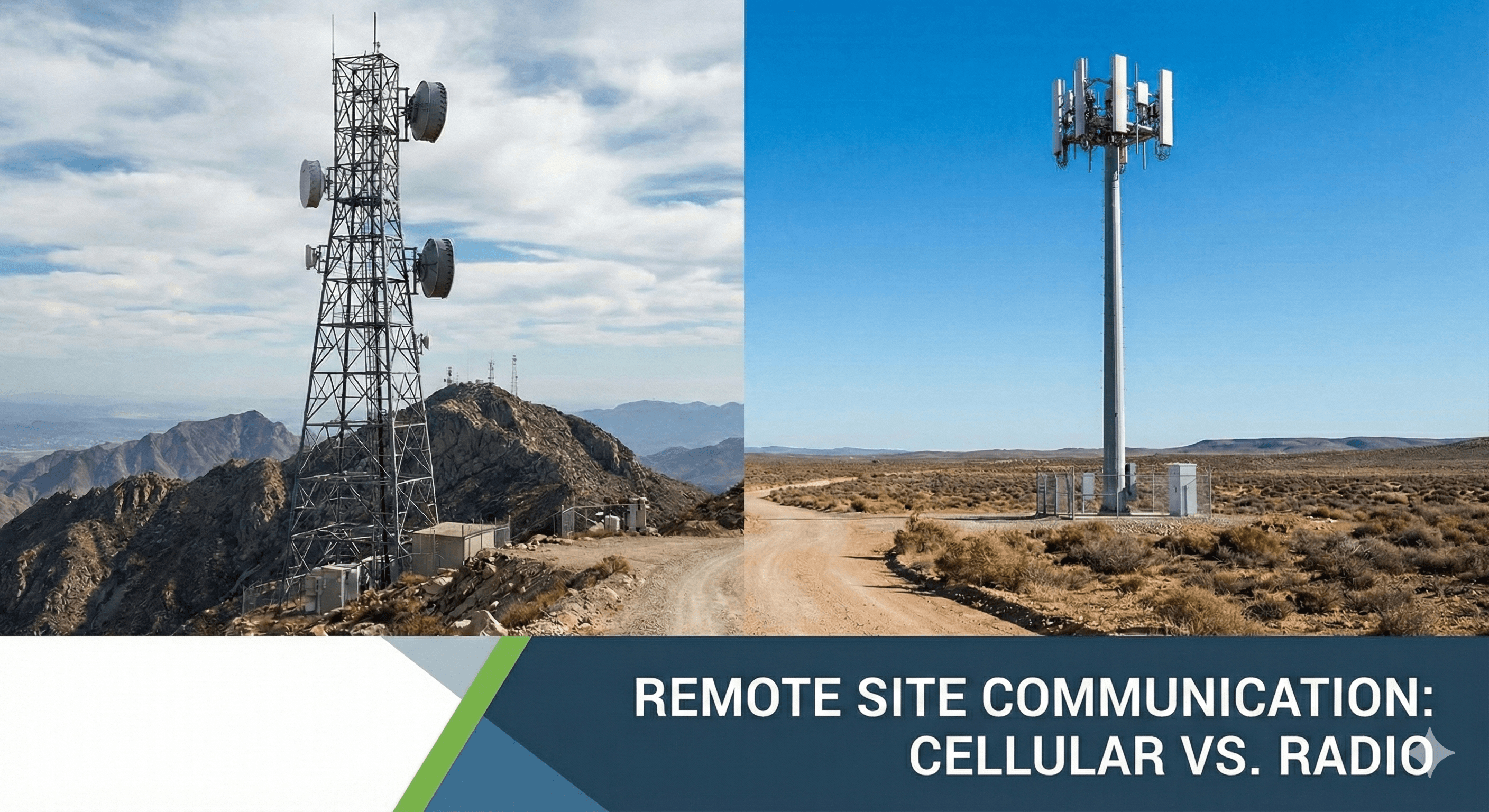
In the world of industrial automation and remote telemetry, the "last mile" of communication is often the hardest to bridge. Whether you are monitoring pump stations, managing a solar farm, or coordinating a distributed SCADA network, the debate often comes down to two primary contenders: Cellular (LTE/5G) and High-Bandwidth Radio.
At Time Assign, we know that engineering decisions are rarely black and white—they are about tradeoffs between Control (CAPEX) and Convenience (OPEX).
Here is our engineering-focused breakdown on how to choose the right path for your remote sites, and why we believe cellular is the practical winner for most, while radio remains the king of independence.
The Default Route: Why Cellular is Winning
For the vast majority of modern industrial applications, Industrial Cellular has become the standard. The reasoning is simple: the infrastructure is already built, maintained, and upgraded by someone else.
Why it works for the majority:
Low Barrier to Entry: You don't need to perform path studies or climb towers to align yagi antennas. If there is a signal, you drop in a gateway (like a Sierra Wireless or Cradlepoint), insert a SIM, and you are online.
Bandwidth & Latency: With modern 4G LTE and emerging 5G networks, bandwidth is rarely a bottleneck for standard polling rates or even remote HMI access.
Scalability: Adding a new site doesn't degrade the throughput of your existing network, unlike a crowded radio frequency where collisions can increase latency.
The "Gotchas":
Recurring Costs (OPEX): You are renting your connectivity. Data plans add up, and you are at the mercy of carrier price hikes.
Dependence: If the local cell tower goes down during a storm or power outage, your site goes dark. You have zero control over the repair timeline.
The Verdict: For 90% of users who need reliable data without becoming a telecom operator, Cellular is the most efficient route.
The Independent Route: High-Bandwidth Radio
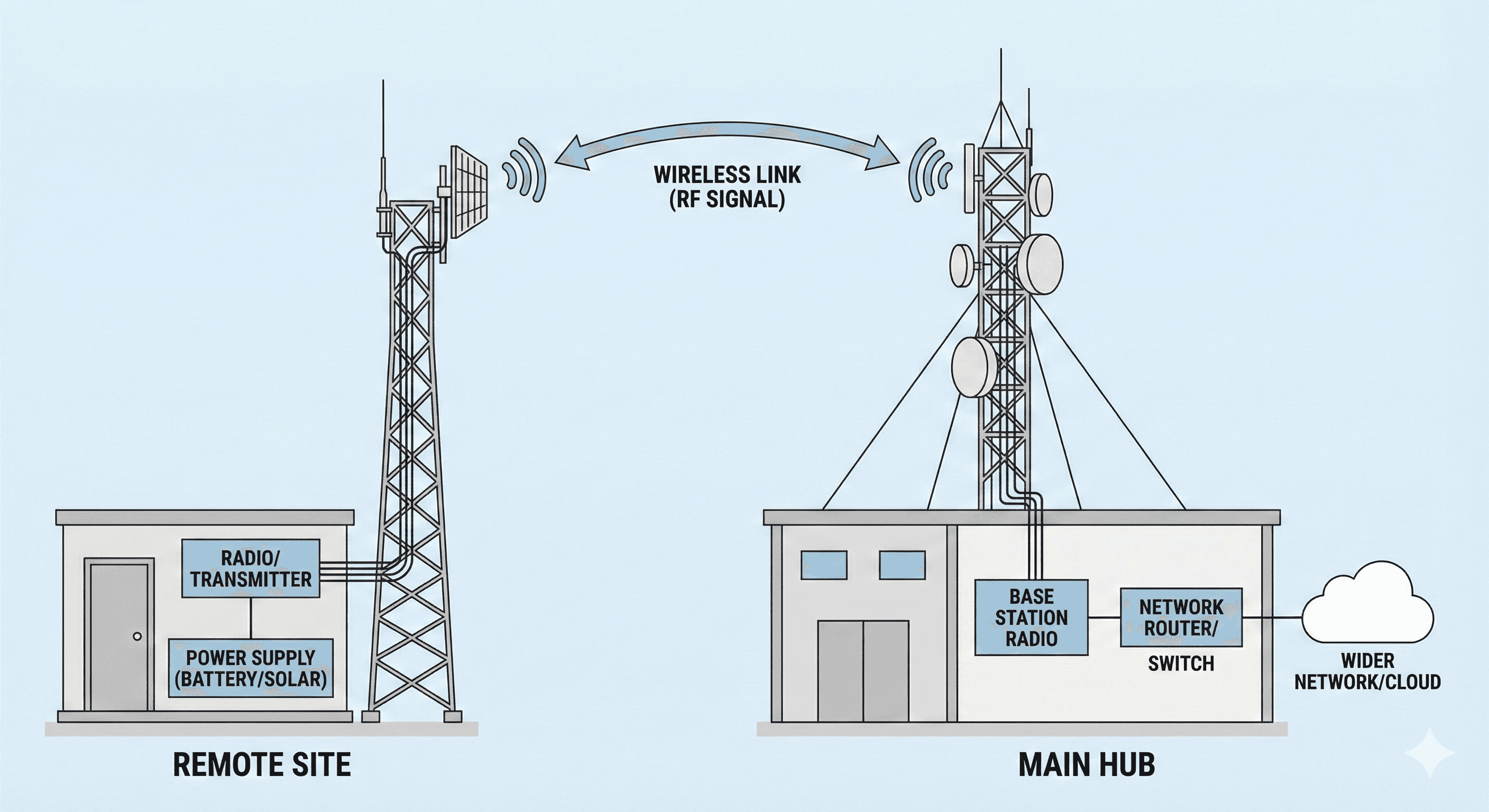
While cellular offers convenience, there is a specific tier of engineers and organizations that prioritize sovereignty over their infrastructure. This is where high-bandwidth, industrial radio (often licensed microwave or advanced 900MHz unlicensed spread spectrum) shines.
This is the "pro" setup. It requires more expertise, but it delivers something cellular cannot: Total Independence.
Why choose Radio?
Network Ownership: You own the network from end to end. There are no monthly data fees, no throttling, and no third-party reliance.
Security (Air-Gapping): A private radio network does not touch the public internet unless you want it to. For critical infrastructure requiring strict security, this physical separation is invaluable.
Long-Term Value: While the upfront cost is high, a well-maintained radio network pays for itself by eliminating monthly carrier fees over 10+ years.
The Cost of Independence:
High CAPEX: You aren't just buying radios. You are paying for tower climbs, line-of-sight analysis, and potentially FCC licensing fees.
Maintenance: You are the ISP. If a radio fails or an antenna moves in high wind, your team has to fix it.
The Verdict: High-bandwidth radio is a great option, but it is a higher initial cost route reserved for those who demand an independent setup and have the capital to deploy it.
Final Thoughts
If you are looking for the path of least resistance that works reliably for most SCADA and telemetry applications, cellular is the current best route. It allows you to focus on your controls logic rather than network topology.
However, if your project demands a completely autonomous system—and you have the budget to support the infrastructure—high-bandwidth radio remains the gold standard for independent industrial communication.
More