The Software-Defined Factory
3 mins read
Published Feb 11, 2026
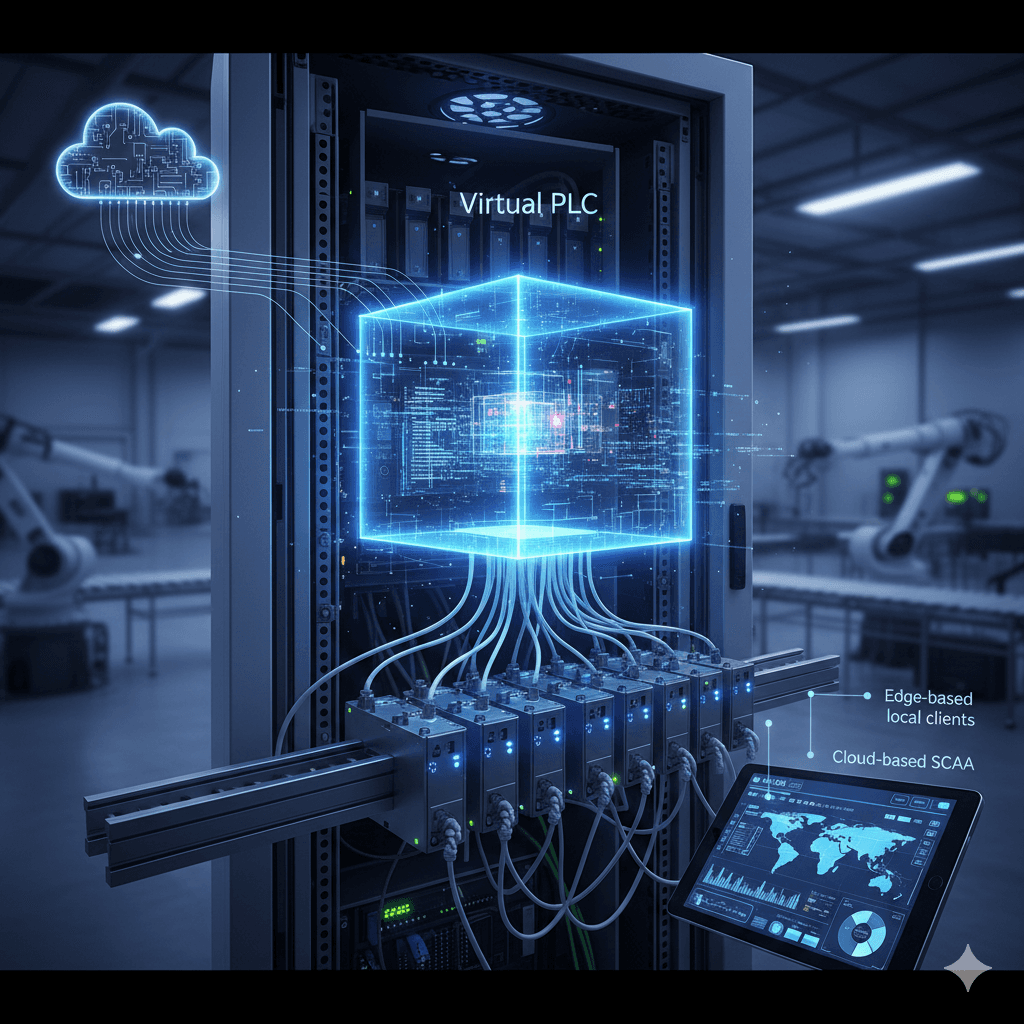
In the industrial automation world, the era of the "magic black box"—the proprietary, hardware-locked PLC—is transitioning into a more open, software-defined future. For a systems integrator like Time Assign, this shift isn't just a technical upgrade; it’s a fundamental change in how we help clients track time, manage project lifecycles, and optimize production.
By decoupling the "brain" of the control system from its physical chassis, we unlock levels of scalability and data visibility that were previously impossible.
1. Virtualized PLCs: The New Industrial Standard
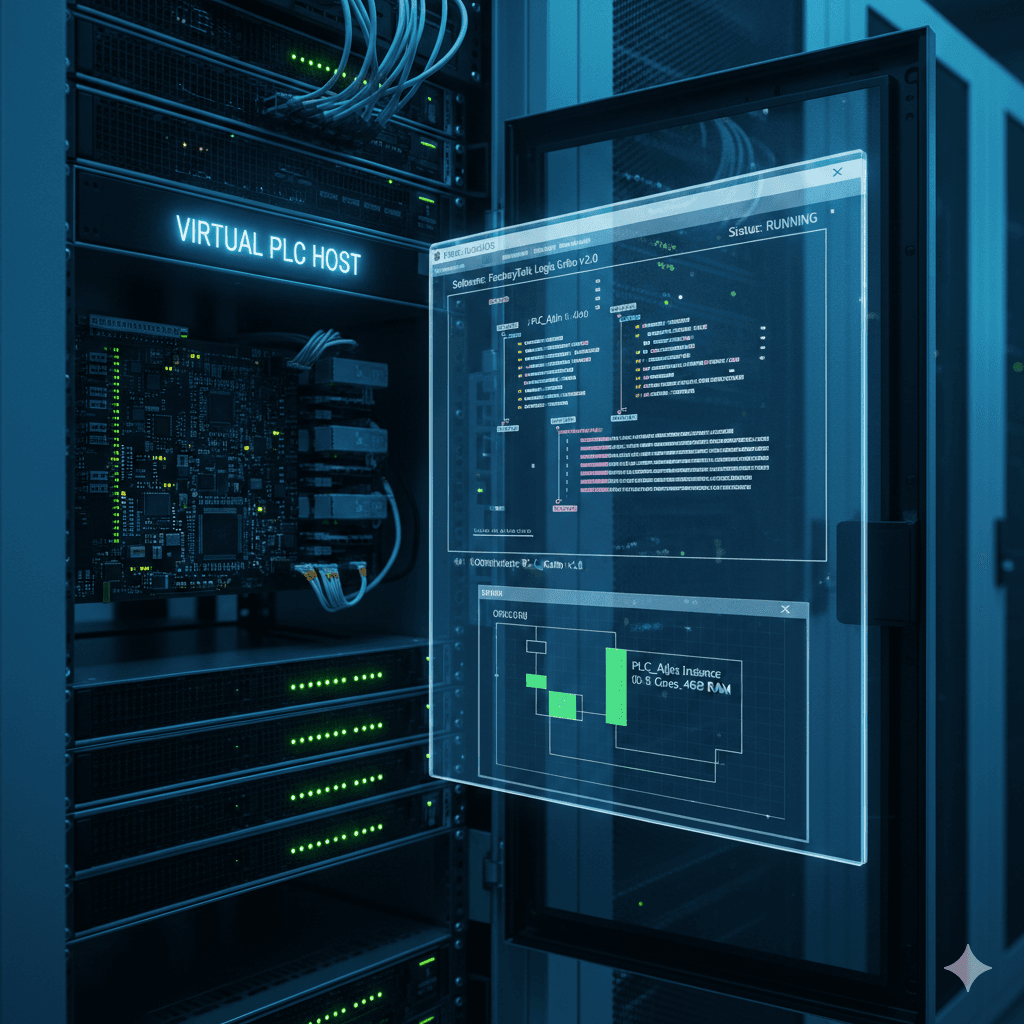
A virtual PLC (vPLC) performs the exact same deterministic control as a physical controller, but it runs as a software instance—often in a Docker container or a real-time hypervisor—on an industrial edge server.
The Hardware: High-Performance Industrial Edge Servers
To run a vPLC you need hardware that bridges the gap between IT processing power and OT (Operational Technology) ruggedness. We are moving beyond standard DIN-rail PLCs to powerful edge computing units:
Siemens IPC 627E / 847E: These are the heavy lifters. A high-spec IPC 847E featuring an Intel Xeon E-2278GE and 128 GB of RAM can act as a "virtual rack," hosting multiple instances of the SIMATIC S7-1500V virtual controller simultaneously.
Dell PowerEdge XR4000: This is a "ruggedized" server designed specifically for the factory floor. It is short-depth, can withstand high heat and vibration, and allows IT departments to manage factory controls using standard tools like VMware or vSphere.
Phoenix Contact PLCnext Control: While it looks like a PLC, the hardware (like the AXC F 3152) runs on a Linux core. This allows us to run standard IEC 61131 control logic on one core while running Python scripts or Docker containers on another, seamlessly merging high-level language processing with industrial control.
The Benefit: If a line needs an upgrade, you don't buy a new PLC. You simply reallocate CPU cores and RAM within your existing edge server or spin up a new container.
2. Networked IO: Moving Logic, Keeping the Connection
When the PLC becomes virtual, it needs a way to "touch" the physical world. This is achieved through Networked IO Modules that communicate via high-speed, deterministic Ethernet protocols. We are seeing a massive shift toward "Cabinet-Free" automation using IP67-rated hardware.
The Hardware: Distributed Intelligence
Siemens ET 200eco PN: These are fully sealed, block-style IO modules with a zinc die-cast housing. They mount directly on the machine frame (no cabinet needed) and communicate via PROFINET. They are robust enough to be walked on, yet fast enough for motion control.
Allen-Bradley ArmorBlock 5000: For facilities using EtherNet/IP, these On-Machine™ blocks offer localized IO that connects back to the virtual controller. They feature IO-Link integration, allowing the vPLC to pull diagnostic data (like sensor health) directly from the field devices.
Beckhoff EtherCAT Terminals (EP Series): For ultra-high-speed applications, Beckhoff’s EP box modules provide IP67 protection while utilizing the EtherCAT protocol. When paired with a C6030 Ultra-Compact Industrial PC, you can achieve cycle times in the microseconds, allowing a virtual brain to react faster than most physical PLCs.
The Time Assign Advantage: Commissioning times are slashed. If a module fails, maintenance staff simply swaps the block. The virtual controller recognizes the new device and automatically pushes the configuration—no laptop or manual reprogramming required.
3. SCADA in the Cloud: Global Vision, Local Resilience
The "Future of SCADA" is a hybrid model. We utilize the infinite storage and processing of the cloud for analysis, while relying on robust edge computing for local operations.
The Architecture: Cloud Core with Edge Clients
Cloud Infrastructure: Platforms like Ignition Cloud Edition or AVEVA Connect run on AWS or Azure. This centralizes data from every facility you own. A project manager at Corporate Headquarters can monitor real-time production metrics from a facility in Mexico or Germany on the same dashboard.
The Hardware: Edge Gateways and Zero-Touch Computing
To ensure the system works even when the internet is down, we deploy powerful local clients:
Stratus ztC Edge: This is a "Zero-Touch" computing platform. It consists of two redundant nodes that mirror each other. If one hardware node fails, the other takes over instantly with no data loss. It is self-healing and ideal for running local SCADA clients that cannot afford a single second of downtime.
Opto 22 groov EPIC: This Edge Programmable Industrial Controller serves as a local HMI and data gateway. It can publish data directly to the cloud via MQTT Sparkplug B, ensuring lightweight and secure data transmission.
OnLogic Karbon Series: These rugged, fanless computers are engineered to survive in harsh environments (dust, heat, vibration) while serving as the local gateway that buffers data during internet outages.
The Resilience Loop: If the facility loses internet connectivity, the Stratus or OnLogic device continues to run the local display and buffers all data. Once the connection is restored, it "backfills" that data to the cloud, ensuring your project tracking remains 100% accurate.
4. Why This Matters for Project Management
At Time Assign, our integration philosophy focuses on Data Democratization. When your control system is virtual and your SCADA is in the cloud, you gain three distinct advantages:
Time Tracking is Automatic: Machine downtime and operator efficiency are logged directly to your project management software via API, eliminating human error.
Maintenance is Predictive: We use the cloud’s processing power to analyze trends—like motor current spikes on a specific conveyor—alerting you before a failure impacts your project timeline.
Scalability is Infinite: Your control system grows as your company grows, without the "hardware tax" of the past.
The future of control systems isn't just about making machines move—it's about making industrial data work for your business.
More