Why System Integrators Must Track "Free" Work
6 mins read
Published Jan 10, 2026
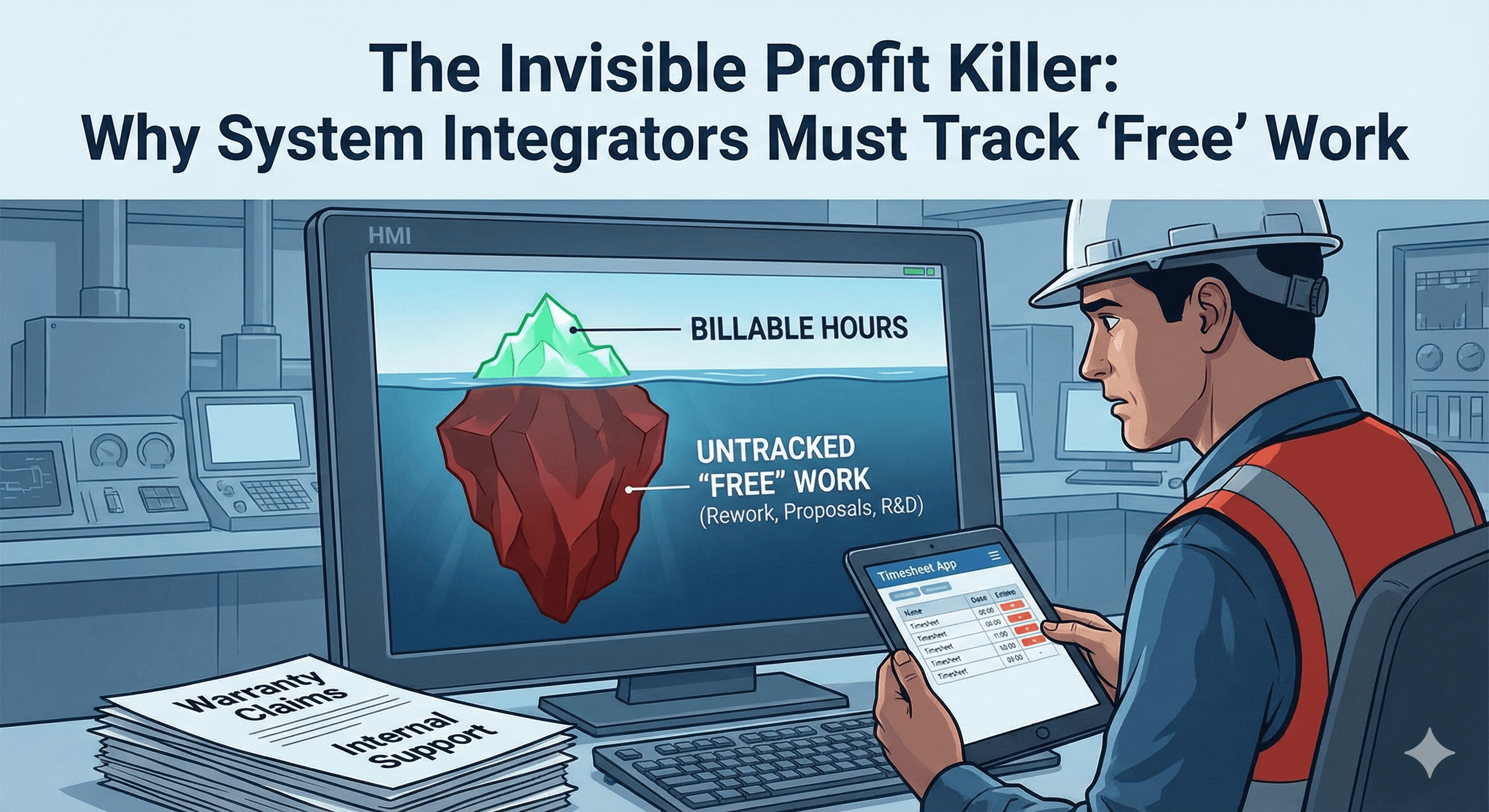
In the world of industrial automation, "billable hours" is usually the king metric. If an engineer is on-site commissioning a PLC or writing SCADA tags that the client is paying for, the timesheet is easy to fill out.
But what about the rest? The "quick" favor for a past client? The three days spent drafting a proposal that might not win? The hours spent debugging a library block that should have worked the first time?
For many Control Engineers and System Integrators (SIs), this work often goes untracked. It feels like "free" work—internal noise that doesn't generate an invoice. However, failing to track this time is one of the biggest mistakes an integration firm can make. It distorts your reality, hides inefficiencies, and eventually erodes your margins.
Here is why you need to track every hour—even the ones you are giving away for free.
1. The "Fixed-Bid" Reality Check
Many integration projects are Fixed-Bid (Lump Sum), not Time & Materials (T&M).
If you bid a project at $50,000 expecting it to take 300 hours, you are aiming for a specific effective hourly rate. If your engineers stop tracking time once they hit the 300-hour budget cap—because they feel guilty or think "it doesn't matter, we aren't getting paid for it"—you lose critical data.
If that project actually took 450 hours, your effective hourly rate just plummeted. If you don't track those "free" extra 150 hours, you will bid the next similar project at 300 hours again, locking yourself into a cycle of low-margin work.
Key Takeaway: You cannot estimate the future accurately if you lie about the past. Tracking overruns is the only way to correct your estimating model.
2. Uncovering the "Warranty" Black Hole
Warranty and rework are the silent killers of SI profitability.
When a panel is built incorrectly and needs rewiring, or a logic error requires an engineer to VPN in and patch code six months after handover, that is "free" work for the client. It is a cost to you.
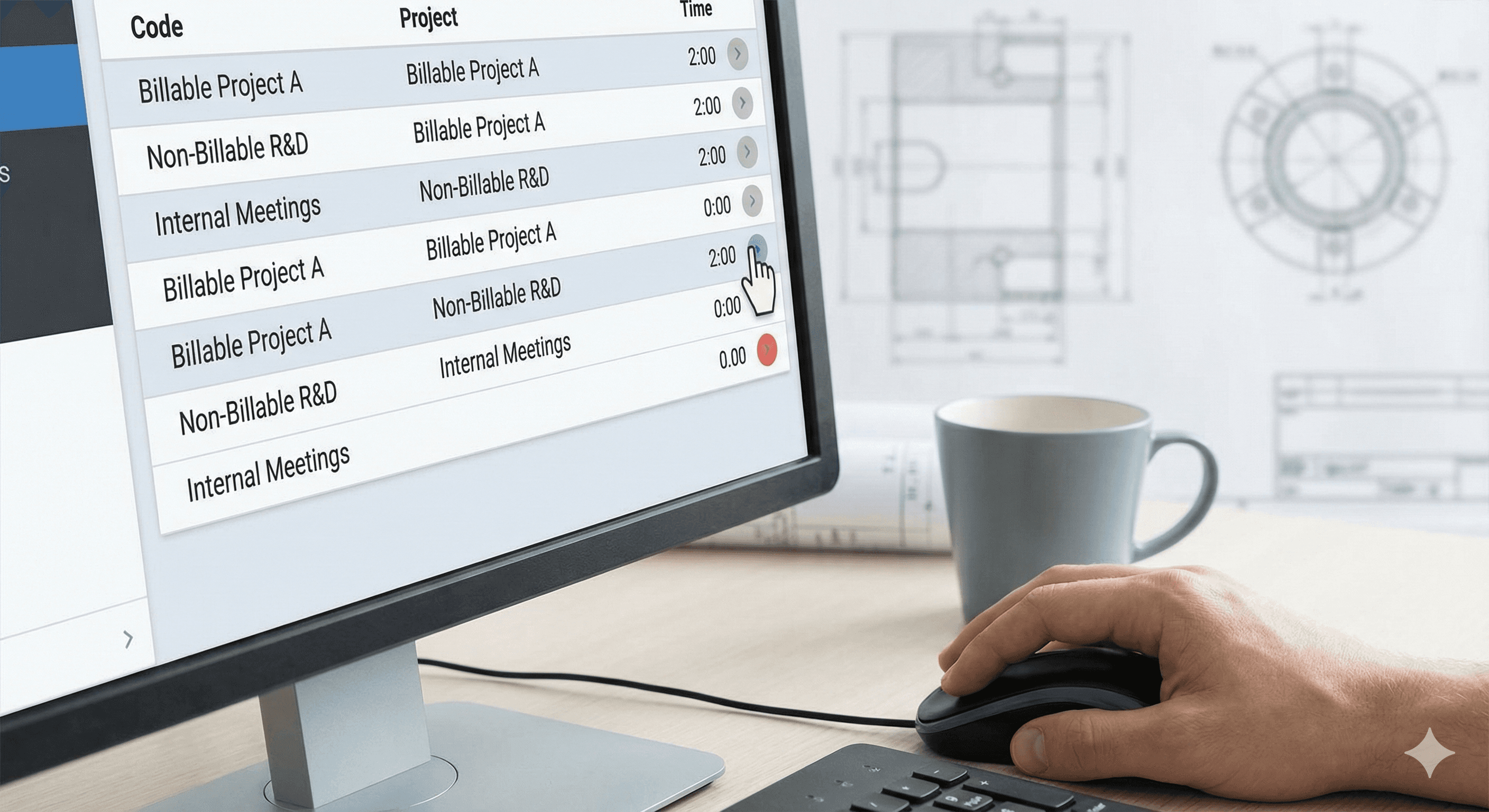
If you lump this time into a generic "Overhead" bucket, you miss the root cause. By tracking "Warranty/Rework" as a specific non-billable phase, you can spot trends:
Is it a specific component? (e.g., "Every time we use VFD Brand X, we spend 10 hours on support.")
Is it a process issue? (e.g., "We are skipping internal FATs, leading to higher site debug time.")
3. The High Cost of Pre-Sales Engineering
System integrators are notorious for over-engineering proposals. An Application Engineer might spend 40 hours designing a conceptual architecture and getting vendor quotes for a project that only has a 10% chance of closing.
If you don't track this "free" pre-sales effort, you cannot calculate your Cost of Acquisition.
By tracking this time, you might realize you are spending $5,000 in engineering time to chase $10,000 projects. That data empowers you to implement a "No-Bid" policy for low-probability leads, freeing up your best engineers for actual billable work.
4. Capitalizing Internal R&D
Are your engineers building a reusable library of function blocks or a template specifically for Water/Wastewater projects?
While this work is "free" (non-billable) right now, it is an investment. In accounting terms, this can sometimes be capitalized rather than expensed, which affects the company's valuation. In practical terms, it reduces hours on future projects.
If you don't track the time spent building these internal tools, you can't measure their ROI. Did spending 100 hours building that "Universal Motor Control Block" actually save the team time this year? You won't know unless you track the creation time and the deployment time.
5. Protecting Your Engineers (Utilization vs. Burnout)
If an engineer works 40 billable hours and 15 non-billable hours (internal meetings, training, proposal support) in a week, but only records the billable time, the data suggests they have a manageable workload. In reality, they are working 55-hour weeks and approaching burnout.
Tracking "free" work provides visibility into the Total Utilization of your team. It allows management to see that while an engineer might only be 60% billable, they are 110% utilized. This signals the need to hire more support staff or reduce administrative burdens before your key talent quits.
Conclusion: Data is Profit
Tracking "free" work isn't about micromanaging engineers or punishing them for non-billable hours. It is about understanding the True Cost of Business.
In the System Integration industry, time is your only inventory. If you aren't counting it, you are losing it. Start tracking the non-billable hours today, and you will finally see where your profit is really going.
More